
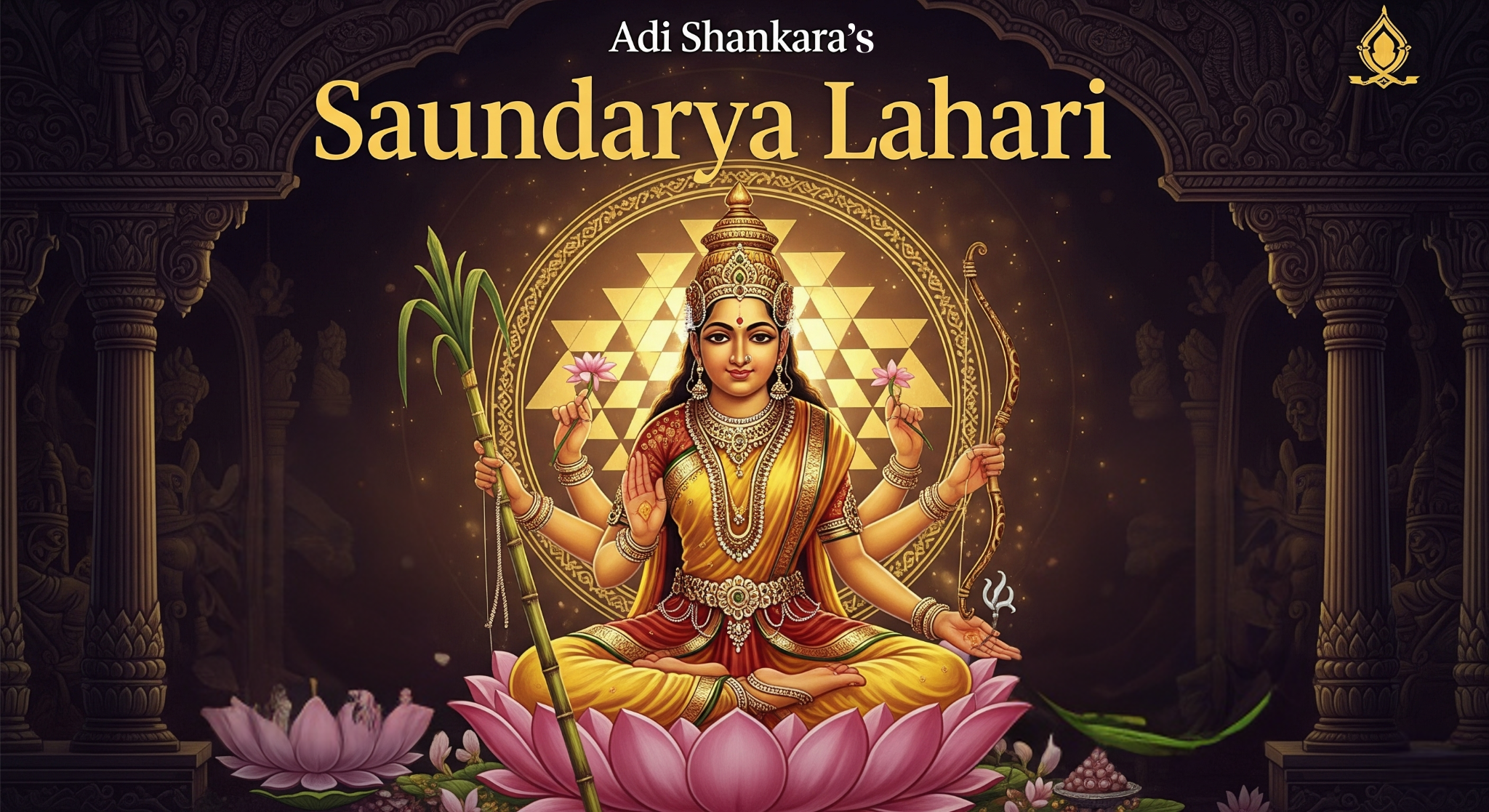
जगत्सूते धाता हरिरवति रुद्रः क्षपयते तिरस्कुर्वन्नेतत्स्वमपि वपुरीशस्तिरयति। सदापूर्वः सर्वं तदिदमनुगृह्णाति च शिव- स्तवाज्ञामालम्ब्य क्षणचलितयोर्भ्रूलतिकयोः॥
jagat sūtē dhātā harir avati rudraḥ kṣapayatē tiraskurvann ētat svam api vapur īśas tirayati। sadā-pūrvaḥ sarvaṁ tad idam anugṛhṇāti ca śiva- stavājnām ālambya kṣaṇa-calitayōr bhrūlatikayōḥ॥
Translation
Brahma creates the world, Vishnu protects, Rudra destroys, and Shiva, concealing even his own form, withdraws it. Yet, ever-prior, Shiva graces all this, relying on the momentary movement of your eyebrow-vines.
Word by word
- jagat
- world
- sūtē
- creates
- dhātā
- Brahma
- hariḥ
- Vishnu
- avati
- protects
- rudraḥ
- Rudra
- kṣapayatē
- destroys
- tiraskurvan
- concealing
- ētat
- this
- svam
- own
- api
- even
- vapur
- body
- īśaḥ
- Lord (Shiva)
- tirayati
- withdraws
- sadā-pūrvaḥ
- ever-prior
- sarvaṁ
- all
- tad
- that
- idam
- this
- anugṛhṇāti
- graces
- ca
- and
- śivaḥ
- Shiva
- tava
- your
- ājñām
- command
- ālambya
- relying on
- kṣaṇa
- moment
- calitayōḥ
- moving
- bhrūlatikayōḥ
- of eyebrow-vines
Meaning
The verse outlines the cosmic roles of the Trimurti—Brahma (dhātā) creates, Vishnu (hari) preserves, Rudra destroys—while Shiva (īśa) withdraws creation, even concealing himself. However, all these functions depend on the Goddess’s command, signaled by a fleeting movement of her eyebrows (bhrūlatikā). In Śrīvidyā, her eyebrow movement symbolizes her icchā śakti (will-power), directing cosmic processes. The verse emphasizes her supremacy in Shakta theology, portraying her as the primal force behind all divine actions.