
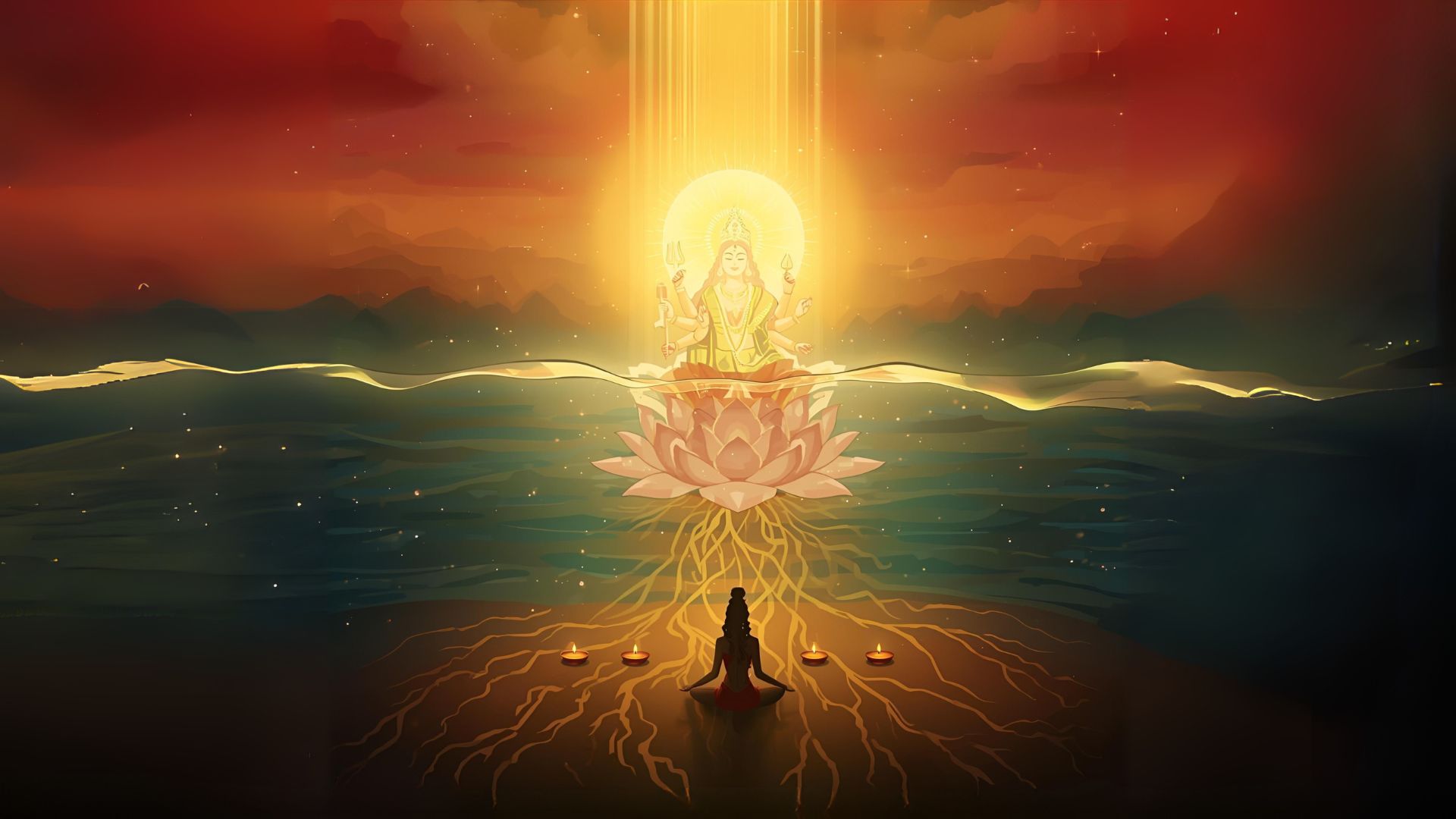
Completion of Navaratri Sadhana and Grounding of Energy
Lilendra Purush Dhakal
Writer and spiritual educator sharing insights on tantra, yoga, vedanta and authentic sadhanas for modern seekers.
In the realm of Hindu spiritual traditions, Navaratri Sadhana represents a profound observance dedicated to the Divine Mother, Durga. This nine-night festival, observed twice each year—in spring as Chaitra Navaratri and in autumn as Sharad Navaratri—entails dedicated practices such as fasting, mantra chanting, and devotional rituals to summon Shakti, the universal energy. Yet, the conclusion of this sadhana, frequently disregarded by participants, carries as much significance as the summoning itself. Appropriate closure, referred to in ritual terms as samapana or visarjan, guarantees that the elevated energies blend smoothly, averting any negative impacts on the individual's physical and mental health.
Scriptural and historical records show that Navaratri originates from the Durga Saptashati, a revered scripture in the Markandeya Purana, detailing the Goddess's victories against demons such as Mahishasura, Shumbha, and Nishumbha. These narratives symbolise not only the triumph of virtue over vice but also the recurring pattern of energy summoning and liberation. For example, after defeating Mahishasura, the demigods under Indra's leadership present hymns to the Goddess, urging her to dispel disasters when recalled. A prominent verse from Chapter 4 states:
saṁsmṛtā saṁsmṛtā tvaṁ no
hiṁsethāḥ paramāpadaḥ |
yaśca martyaḥ stavairbhiḥ
tvāṁ stoṣyatyamalānane || 36 ||
" This translates to: "...may you, when remembered, destroy our great calamities. And, O one with the spotless face, whatever mortal praises you with these hymns (of ours)..."
In this setting, the verse conveys the demigods' plea for the Goddess to address their crises upon invocation through remembrance and praise. It highlights a respectful parting from the divine force, coupled with a pledge of her reappearance during dire needs, emphasising the necessity of concluding rituals with appreciation and a mechanism for future summons.
Likewise, after slaying of Shumbha and Nishumbha in Chapter 11, the gods answer the Goddess's proposal for blessings by asking:
sarvābādhā praśamanaṁ
trailokya asya akhileśvari |
evameva tvayā kāryam
asmad vairivināśanam || 39 ||
"O Ruler of the entire universe, we ask that You remove every obstacle across all realms, defeat our enemies, and continue to protect us."
Within the narrative, this response illustrates the conclusion by condensing the summoned energy while setting terms for its reawakening. It reflects the demigods' recognition of the Goddess's role in ongoing protection, ensuring that the power withdraws yet remains accessible for future adversities.
In ritual application, this appears in the Durga Visarjan on Vijayadashami, the tenth day, where followers submerge the idol or kalash in water, signifying Shakti's return to her ethereal domain. The ceremony features chants such as:
gaccha gaccha suraśreṣṭha
svasthānaṃ parameśvari |
pūjārādhānakāle ca
punarāgamanaṃ ca ||
"Go, go, O best of the gods, to your own abode, O Supreme Goddess. And [please] come back again at the time of worship and adoration."
which farewell the Goddess and welcome her return. This procedure signifies not merely an end but a rejuvenation, where the submersion denotes the shedding of self-importance and the assurance of new starts, resonating with existence's transient patterns.
Apart from these ceremonial aspects, anchoring the energy following sadhana proves essential for physical beings. Instructors in spirituality tend to prioritise upward-moving energies—elevating Kundalini or linking to superior dimensions—while overlooking the return to worldly firmness. Lacking anchorage, individuals might face confusion, worry, or bodily tiredness, since intensified conditions can unsettle the base chakra (Muladhara), which oversees safety and ties to the tangible realm. Anchoring reestablishes harmony by securing these energies, permitting a lively existence in routine activities.
Effective anchoring methods, derived from yogic and health customs, work well after demanding observances like Navaratri. A technique centres on respiration: position yourself at ease and direct focus to gradual, profound breaths in and out, picturing surplus energy descending into the soil akin to a tree's roots. Strolling without shoes on turf or earth, termed earthing, enables immediate linkage with the world's steadying pulses, aiding in releasing built-up tension. Drinking tepid, caffeine-free drinks like herbal infusions with ginger or turmeric calms the body and focuses the thoughts. Ingesting supportive nourishment—root produce such as carrots, beets, or potatoes, or cereals like brown rice—offers bodily substance to offset airy buoyancy. Reclining on the soil or embracing a tree takes in supportive vitality, easing pressure. These strategies, backed by modern research on awareness and environmental healing, confirm that the advantages of sadhana persist without excess.
Ultimately, finalising Navaratri Sadhana via visarjan and anchoring converts a fleeting ceremony into enduring strength. Through respecting the Goddess's exit with thankfulness, as shown in venerable scriptures, and applying anchoring approaches, participants incorporate the sacred vitality into their everyday existence. This equitable method cultivates endurance, underscoring that authentic spirituality connects the sublime and the mundane.
Share this article
Related Articles
The Transformative Power of Navaratri Sadhana
Discover how the nine nights of Navaratri can transform your spiritual practice and deepen your connection with the Divine Feminine.
The Essence of Tantra Yoga Vidya
Explore the profound meaning and sacred symbolism behind Tantra Yoga Vidya, a transformative system that integrates ancient wisdom with modern accessibility.

Significance of Navaratri Sadhana
Navaratri Sadhana is more than a festival; it is a disciplined path to harness divine archetypes for empowerment and inner transformation.

Vijaya Dashami: The Celebration of Victory Over Darkness
Discover the spiritual and yogic significance of Vijaya Dashami. Learn how the stories of Goddess Durga’s victories symbolize our inner battles against negativity, ego, and ignorance.