
Significance of Navaratri Sadhana

Lilendra Purush Dhakal
Writer and spiritual educator sharing insights on tantra, yoga, vedanta and authentic sadhanas for modern seekers.
Navaratri Sadhana stands at the meeting point of ritual, inner work, and deliberate transformation. In Sanatana Dharma, the many gods and goddesses are not fixtures of myth alone. Each form represents an aspect of reality and of human capacity. Tantra treats the manifest world as energy. When practiced with clarity, worship and meditation become methods for channeling and refining those energies rather than ends in themselves. Navaratri is the natural field for that work. The nine nights invite focused attention on nine archetypal expressions of the Divine Mother so that the seeker can cultivate the corresponding strengths.
At the deepest level, the universe is understood as one unchanging reality that gives rise to manifold manifestations. That primeval source, often spoken of as Adi Shakti, expresses itself through many Devis. These Devis are living archetypes. To name, visualize, and worship a Devi is to engage with a stable pattern of energy that supports particular capacities in life. This is not superstition. It is a practical psychology and energetic technology. If a person seeks steadiness, discipline, courage, creative power, or compassionate leadership, there is a recognized Devi form whose qualities can be cultivated through sadhana and attentive practice.
The Navadurga sequence makes this approach concrete. Across the nine nights, each form of the Goddess is honored with its own themes and practices. The ritual framework creates a concentrated corridor in which a practitioner can strengthen the inner faculty associated with each day. Over time, the repeated attention yields measurable shifts in habit, attitude, and capacity. Navaratri thereby becomes a methodical curriculum for personal empowerment rather than only a calendar festival.
Sanatana Dharma also insists upon human freedom and choice. The presence of many forms of the Divine supports that freedom. The world offers possibilities, and the inner work provides the means. To manifest a chosen life, one needs specific skills and inner resources. These develop through steady practice, prayer, study, and the invocation of the appropriate archetypal energy. Tantra’s perspective that mind, intelligence, compassion, and other subtle faculties are forms of energy makes this process logically coherent. A practiced sadhaka learns to observe and direct attention, to supply disciplined intention to the forces one wishes to develop.
Among the Navaratris, the autumn celebration known as Sharadiya Navaratri carries special prominence. This is the time when communities concentrate rituals, meditations, and public worship. The seasonal alignment and traditional observances make it an especially favorable window for deeper sadhana. That practical timing supports sustained practice and communal reinforcement.
To approach Navaratri Sadhana: begin with clarity about a single aim. Choose the Devi archetype whose qualities match that aim and design a short daily practice that includes meditation, a simple mantra or verse, and reflective action. Keep the practice steady and measure small changes over the nine days. A focused ritual need not be elaborate to be effective. The power of Navaratri Sadhana lies in disciplined repetition, evolving insight, and the willingness to translate inner changes into life.
Navaratri Sadhana therefore offers an integrated path. It connects metaphysical understanding with actionable discipline. It honors the truth that all living power is an expression of the one source while giving practitioners clear, repeatable methods to embody the qualities they seek. In that union of unity and multiplicity, Sanatana Dharma provides a nuanced map for spiritual growth and practical transformation.
Share this article
Related Articles
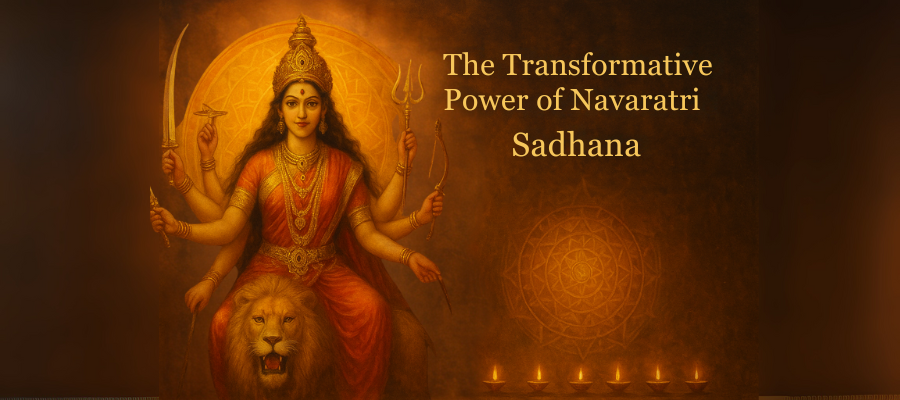
The Transformative Power of Navaratri Sadhana
Discover how the nine nights of Navaratri can transform your spiritual practice and deepen your connection with the Divine Feminine.
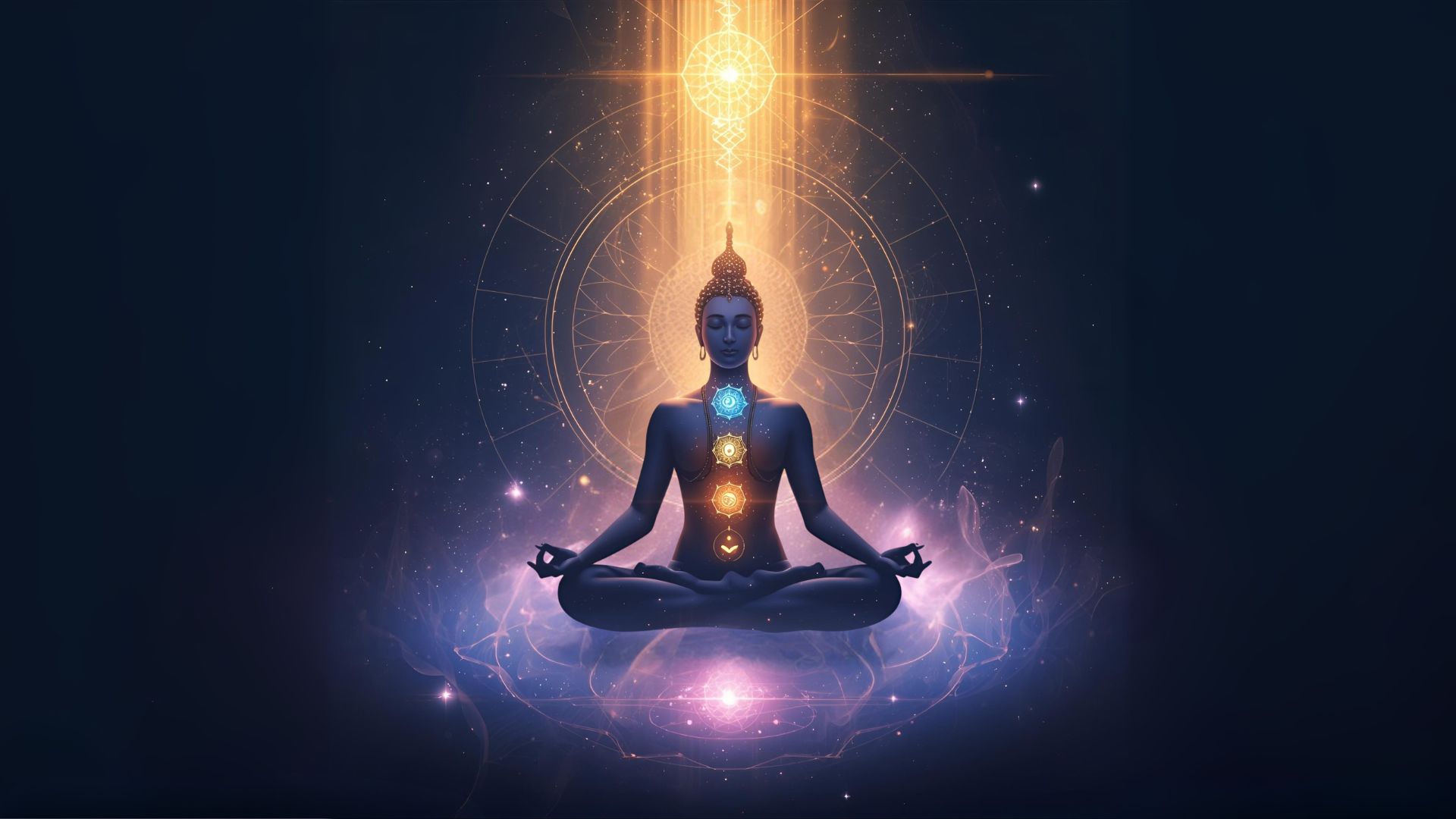
The Essence of Tantra Yoga Vidya
Explore the profound meaning and sacred symbolism behind Tantra Yoga Vidya, a transformative system that integrates ancient wisdom with modern accessibility.

Vijaya Dashami: The Celebration of Victory Over Darkness
Discover the spiritual and yogic significance of Vijaya Dashami. Learn how the stories of Goddess Durga’s victories symbolize our inner battles against negativity, ego, and ignorance.
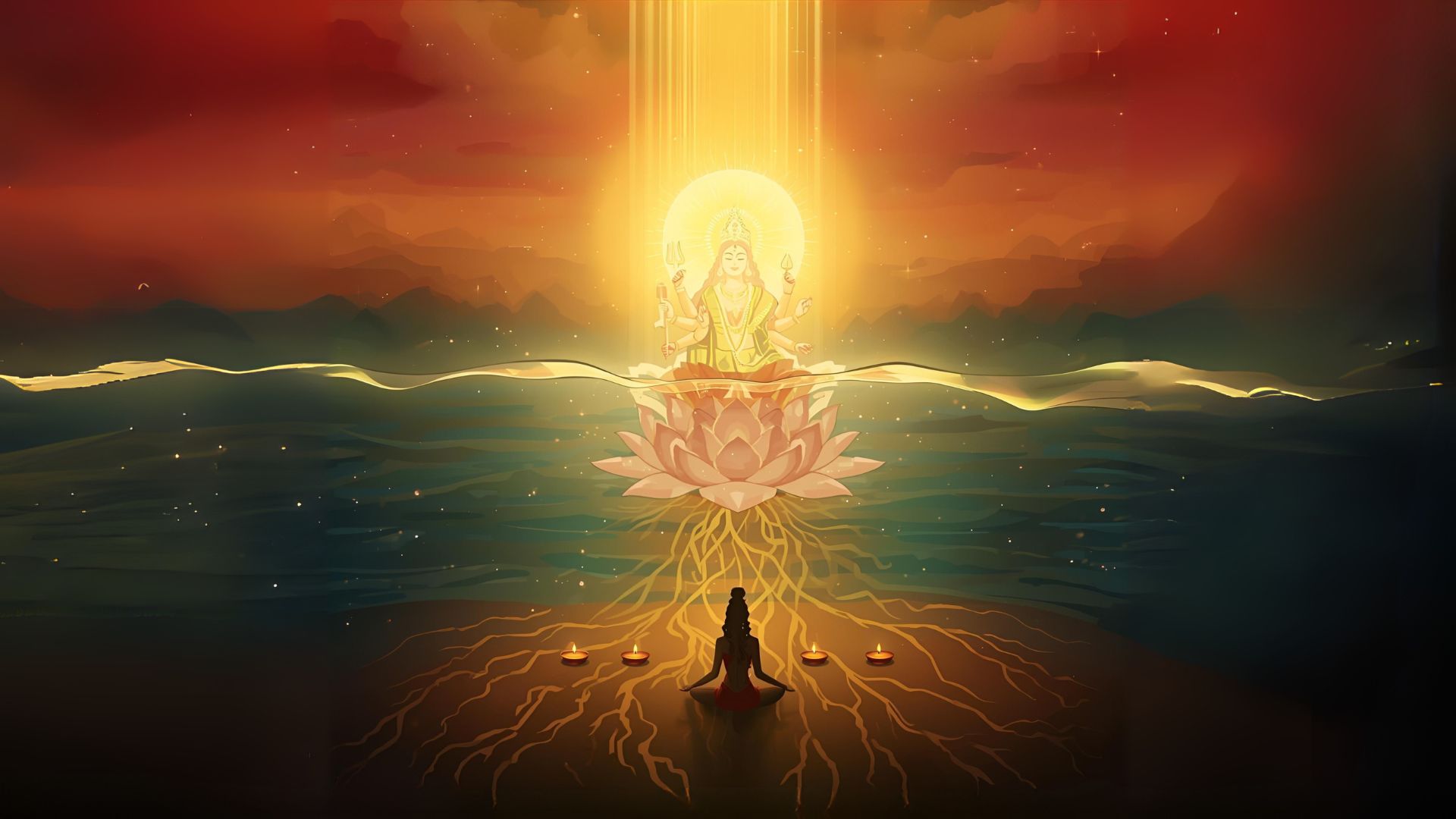
Completion of Navaratri Sadhana and Grounding of Energy
Navaratri Sadhana does not end with nine nights of devotion—it requires proper closure and grounding. Learn how rituals like visarjan and practical methods like breathwork, earthing, and mindful nourishment anchor divine energy into daily life.