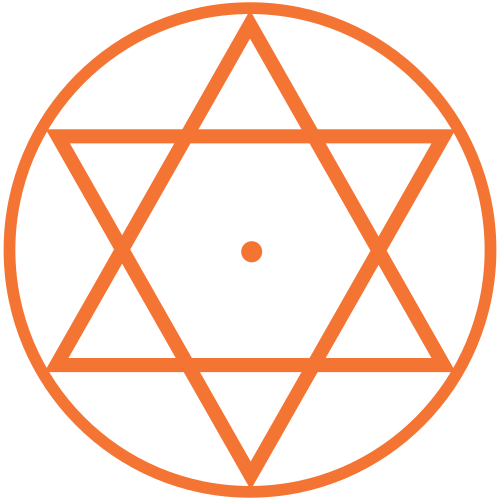
त्वया हृत्वा वामं वपुरपरितृप्तेन मनस्ना शरीराबाम् शम्भोरपरमपि शङ्के हृतमभूत्। यदेतत्त्वद्रूपं सकलमरुणाभं त्रिनयनं कुचाभ्यामानम्रं कुटिलशशचूँडालमकुटम्॥
tvayā hṛtvā vāmaṁ vapur aparitṛptēna manasā śarīrārdhaṁ śambhōr aparam api śaṅkē hṛtam abhūt। yad ētat tvadrūpaṁ sakalam aruṇābhaṁ tri-nayanaṁ kucābhyām ānamraṁ kuṭila-śaśa-cūḍālamakuṭam॥
Translation
With an unsatisfied mind, having taken the left half of Shiva’s body, I suspect you took the other half too, for your entire form is reddish, three-eyed, bent with breasts, and crowned with a curved moon crest-jewel.
Word by word
- tvayā
- by you
- hṛtvā
- having taken
- vāmaṁ
- left
- vapur
- body
- aparitṛptēna
- unsatisfied
- manasā
- with mind
- śarīrārdhaṁ
- half-body
- śambhōḥ
- of Shiva
- aparam
- other
- api
- also
- śaṅkē
- I suspect
- hṛtam
- taken
- abhūt
- was
- yat
- which
- ētat
- this
- tvadrūpaṁ
- your form
- sakalam
- entire
- aruṇābhaṁ
- reddish
- tri-nayanaṁ
- three-eyed
- kucābhyām
- with breasts
- ānamraṁ
- bent
- kuṭila
- curved
- śaśa
- moon
- cūḍāla
- crest-jewel
- makuṭam
- crowned
Meaning
This verse describes the Goddess as Ardhanārīśvara, having taken Shiva’s left half to form her body, but the poet suspects she claimed his entire form, as her appearance—reddish hue (aruṇābha), three eyes (tri-nayana), heavy breasts, and moon-adorned crown—reflects both Shiva and Shakti. In Śrīvidyā, this symbolizes the non-dual union of Shiva (consciousness) and Shakti (energy), where the Goddess encompasses both. The verse highlights her supremacy in Shakta theology, portraying her as the complete divine essence, blending tantric and devotional imagery.