
The Gateway to Divine Union: Yoga as the Path to Realizing Parā Shakti in the Devi Bhagavatam
Lilendra Purush Dhakal
Writer and spiritual educator sharing insights on tantra, yoga, vedanta and authentic sadhanas for modern seekers.
The Gateway to Divine Union: Yoga as the Path to Realizing Parā Shakti in the Devi Bhagavatam
In the profound depths of the Devi Bhagavatam, a cornerstone of Shakta philosophy that celebrates the supremacy of the Divine Mother, Canto 3, Chapter 18 unfolds a narrative rich with devotion, destiny, and the subtle workings of grace. This chapter, centered on the svayamvara of the princess Śaśikalā and her destined union with the exiled prince Sudarśana, serves as more than a romantic tale—it's a tapestry illustrating how human longing intersects with cosmic will. Amid the emotional turmoil of love and the preparations for a royal self-choice ceremony, the text pauses to extol the Goddess's transcendent nature, embedding a verse that cuts to the heart of spiritual pursuit:
yogagamyā parā śaktirmumukṣūṇāṁ ca vallabhā
Here, the seer Vyāsa, narrating through the lens of ancient wisdom, reveals the Goddess not merely as a benevolent force in earthly dramas, but as the supreme energy accessible only through the disciplined embrace of yoga—a realization that propels the sadhaka toward union with Shiva, the eternal consciousness, and the bliss of ultimate liberation.
Unpacking the Verse
Let's unpack this verse with the care it deserves, as if we're unrolling an ancient palm-leaf manuscript under the flicker of a ghee lamp. Each word carries the weight of experiential truth, drawn from the lived sadhana of rishis who traversed the inner landscapes of the self. "Yogagamyā" is the key that unlocks it all—attainable, approachable, realizable through yoga. This isn't the superficial yoga of modern studios, with its poses and flows for physical well-being; it's the classical, integral yoga of Patanjali's sutras and the Tantric texts, encompassing dhyana (meditation), pranayama (breath mastery), and the subtle alchemy of the chakras.
The Goddess, in her form as Parā Shakti—the supreme, transcendent power—demands this rigorous path. She resides not in temples or rituals alone, but in the silent core of being, veiled by the distractions of the mind. Without yoga's steady hand, the sadhaka wanders in samsara's fog, mistaking fleeting glimpses for the full vision.
Context in Canto 3, Chapter 18
Consider the context in Canto 3, Chapter 18: Sudarśana, bereft of kingdom and kin, finds solace not in worldly schemes but in the recitation of Sarasvati's seed mantra, a practice that ignites his inner aura of power. The sages affirm this, praising the Goddess as the vital prana of yogis desirous of liberation—a direct echo of our verse.
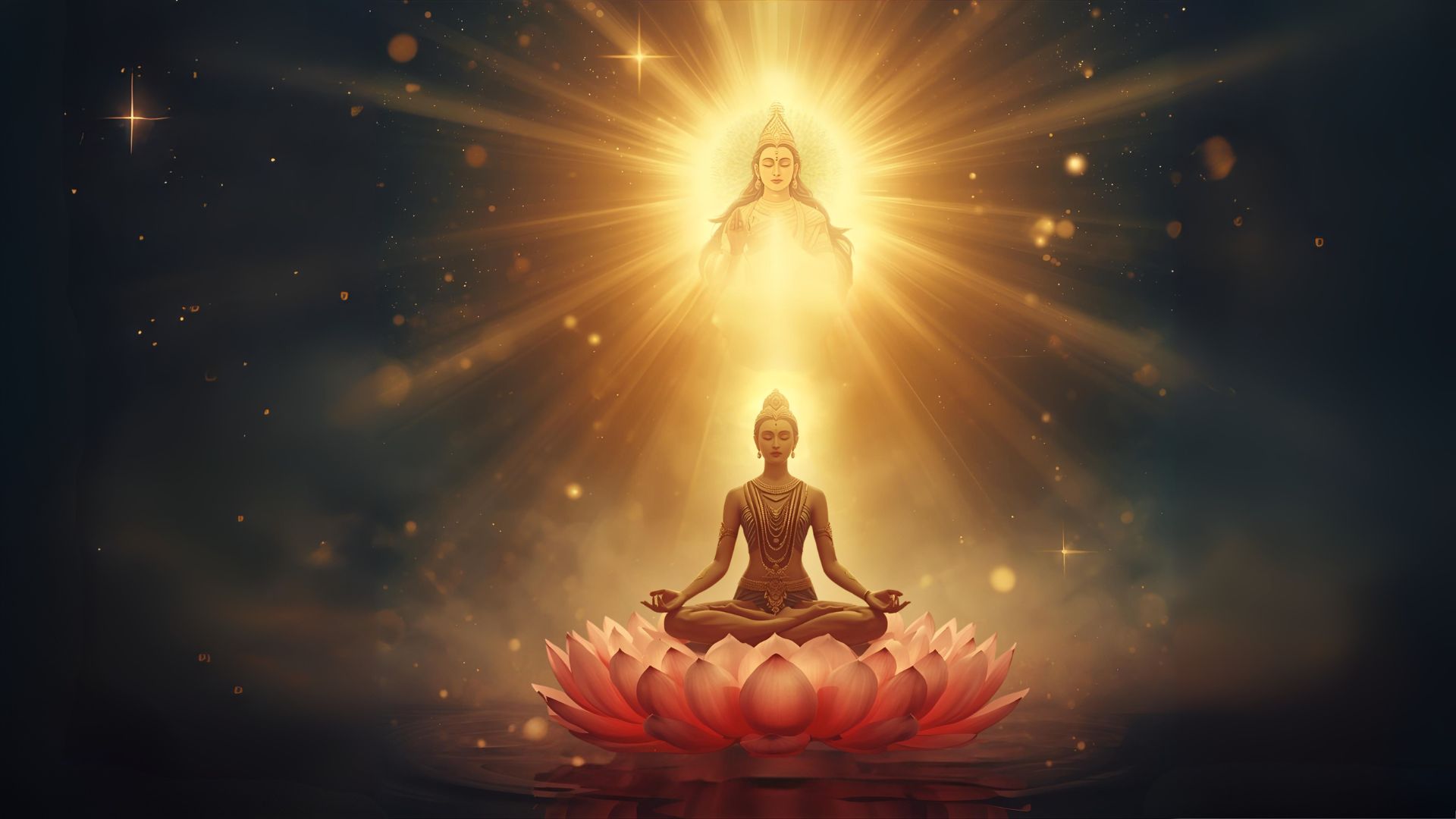
Here, yoga emerges as the indispensable bridge. It purifies the nadis, awakens kundalini at the muladhara, and guides her serpentine ascent through the sushumna nadi, piercing each chakra until she reaches the sahasrara, the thousand-petaled lotus of divine union. This is no abstract metaphor; in Tantric physiology, Shakti is the dynamic energy of creation, the coiled force at the base of the spine that, when roused through yogic discipline, becomes the vehicle for transcendence.
The sadhaka, through asana's stability and pratyahara's withdrawal of senses, cultivates the vessel strong enough to hold her. Bandhas lock her in, mudras direct her flow, and mantra vibration attunes the subtle body. Only then does Parā Shakti reveal herself—not as an external deity to be propitiated, but as the indwelling power, the very substratum of existence.
The Nature of Parā Shakti
And what of "parā śaktiḥ"? This term elevates her beyond the apara, the lower or manifest energies of the world—the play of prakriti in its tamasic, rajasic, and sattvic modes. Parā is the unmanifest, the pure consciousness-energy that precedes creation, the bindu from which the universe emanates in the Tantric cosmology of the Devi Bhagavatam.
Realizing her demands yoga's precision because she is subtle, formless, and infinite—eluding the grasp of mere intellectual inquiry or ritualistic fervor. In my own sadhana, drawn from years immersed in Shakta lineages, I've witnessed this firsthand: the mind's chatter quiets in savasana's surrender, revealing her as the anahata nada, the unstruck sound that dissolves duality. The Bhagavatam underscores this in the chapter's philosophical interlude, where the Goddess is hailed as both higher vidya (knowledge of the self) and lower vidya (knowledge of the world), the prana that sustains the yogi on the cusp of moksha.
Without yoga, she remains a distant echo; with it, she becomes the sadhaka's intimate guide.
Beloved of the Liberation-Seeker
The verse's second breath—"mumukṣūṇāṁ ca vallabhā"—adds a layer of relational warmth, portraying her as the beloved of those who thirst for liberation. Yet even here, yoga infuses the devotion, transforming bhakti from emotional outpouring to enlightened surrender. The mumukshu, the liberation-seeker, approaches not as a beggar but as a prepared vessel, their heart softened by yoga's fire.
This beloved aspect culminates in the ultimate boon: union with Shiva. In Shakta Tantra, Shiva is the static consciousness, the pure awareness at sahasrara, while Shakti is his dynamic counterpart. Their union—ardhanarishvara in microcosm—is the dissolution of subject-object, the non-dual state where liberation dawns.
The Devi Bhagavatam illustrates this through Sudarśana's mantra-fueled empowerment, a yogic practice that aligns him with divine will, paving the way for his restoration. The sadhaka, realizing Parā Shakti through yoga, rides her current to Shiva's abode, where the individual jiva merges into the paramatman. Moksha isn't annihilation but ecstatic wholeness—the dancer and the dance as one.
Yoga as the Gateway
This emphasis on yoga as the sole gateway resonates deeply in the Bhagavatam's broader vision. Unlike paths that glorify grace alone, it insists on preparation: the body as temple, the breath as prasad, the mind as yantra. In Chapter 18's narrative, Śaśikalā's love mirrors this—raw and fervent, yet channeled through mantra recitation, hinting at the yogic discipline beneath devotion's surface.
For the modern seeker, juggling life's demands, this verse is a clarion call: begin with yoga. Sit in padmasana, observe the vrittis subside, and invite her. She will come, not as a thunderbolt, but as the subtle hum that carries you to Shiva's embrace.
Conclusion
In the quiet after Navratri's fervor, or amid daily sadhana, let this verse be your compass. Yoga isn't drudgery; it's the lover's patient wait, the key to unlocking Shakti's door. Realize her, unite with the eternal, and taste the liberation that has eluded sages for eons.
What practice calls to you today? In that question lies the path forward.
Share this article
Related Articles
The Transformative Power of Navaratri Sadhana
Discover how the nine nights of Navaratri can transform your spiritual practice and deepen your connection with the Divine Feminine.
The Essence of Tantra Yoga Vidya
Explore the profound meaning and sacred symbolism behind Tantra Yoga Vidya, a transformative system that integrates ancient wisdom with modern accessibility.

Significance of Navaratri Sadhana
Navaratri Sadhana is more than a festival; it is a disciplined path to harness divine archetypes for empowerment and inner transformation.

Vijaya Dashami: The Celebration of Victory Over Darkness
Discover the spiritual and yogic significance of Vijaya Dashami. Learn how the stories of Goddess Durga’s victories symbolize our inner battles against negativity, ego, and ignorance.